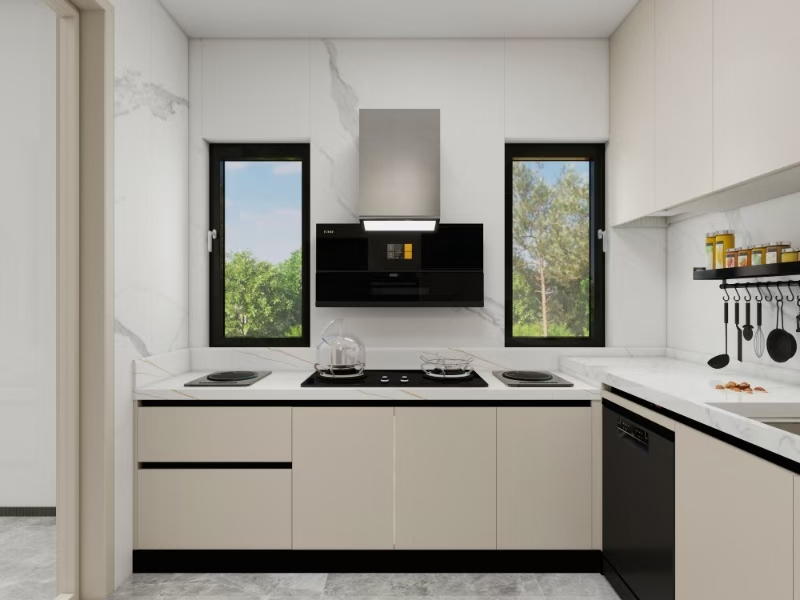
In-Depth Analysis of Vietnam's Range Hood Market in 2025: Shifting Consumer Trends and Brand Positioning Strategies
Comprehensive insights into Vietnam's 2025 range hood market size, emerging consumer behaviours, brand competitive landscape, and regulatory requirements, empowering enterprises to seize opportunities within Southeast Asia's trillion-dollar growth market.
Vietnam's 2025 Range Hood Market: Dual-Engine Growth Driven by Expansion and Consumer Revolution
As an emerging Southeast Asian economy, Vietnam's kitchen appliance market is experiencing explosive growth driven by accelerated urbanisation and the rise of the middle class. Range hoods, as core appliances for enhancing kitchen environments, are increasingly transitioning from basic adoption to quality upgrades. This analysis comprehensively examines Vietnam's range hood market development across five dimensions: market status, consumer behaviour, brand competition, policy compliance, and purchasing guidelines.
---
I. Current State and Growth Potential of Vietnam's Range Hood Market
1.1 Market Scale and Growth Trends
Vietnam's range hood market is undergoing rapid expansion. In 2024, the country's small household appliances sector achieved total revenues of US$29.07 billion, with an annual growth rate projected to remain at 5.37%. As a core category within major kitchen appliances, the range hood segment is projected to surpass US$300 million in market size by 2025. With a compound annual growth rate (CAGR) of 6.5% anticipated between 2025 and 2030, the market is expected to reach US$410 million by 2030. This growth is primarily driven by two core factors: firstly, the continuous rise in urbanisation rates, with Vietnam's urbanisation rate projected to reach 41.4% by 2025, fuelling robust demand for new residential properties and kitchen renovations; secondly, consumption upgrades, as the expanding middle-class population drives increased demand for premium kitchen appliances.
1.2 Market Penetration and Regional Disparities
Vietnam's current household penetration rate for range hoods stands at merely 35%, significantly below China's 81.6% and the global average, indicating substantial market expansion potential. Regional penetration exhibits pronounced stratification: first-tier cities like Ho Chi Minh City and Hanoi exceed 56% penetration, with high-end serviced apartments reaching 75% adoption rates; conversely, rural areas remain below 15% penetration, predominantly relying on traditional exhaust fans. Price segmentation is pronounced, with budget wall-mounted models priced between US$150-300 dominating the Vietnamese market, accounting for over 60% of total sales. The market share of mid-to-high-end products (US$300+) is expanding at an annual rate of 8%.
1.3 Import-Export Dynamics and Production Capacity
China remains Vietnam's primary supplier of range hoods. In 2023, Chinese exports to Vietnam grew by 10.6% year-on-year, accounting for 41% of Vietnam's total supply. Chinese brands dominate the mid-to-low-end market through cost-effectiveness, while foreign brands like Panasonic and Electrolux control the high-end segment, collectively holding over 50% market share. Local brands such as VinGroup are attempting to further penetrate the mid-to-low-end market by reducing costs through localised production.
---
II. Emerging Trends in Vietnamese Consumers' Range Hood Purchasing Behaviour
2.1 Demand Structure: Concurrent Popularisation and Upgrading
Vietnamese consumer demand for range hoods follows a dual-track development: the mass market prioritises basic functionality, favouring wall-mounted models with airflow rates of 800-1200m³/h, with core focus on value for money and durability; the mid-to-high-end market pursues quality upgrades, seeing surging demand for built-in and side-extraction models, where smart integration and silent operation are key selling points. Consumers in international cities like Ho Chi Minh City demonstrate higher acceptance of smart hoods, with products featuring AI smoke control algorithms and IoT connectivity achieving 23% year-on-year sales growth.
2.2 Channel Transformation: Building Materials Channels Dominate, Social Media Fuels Growth
Vietnam's range hood sales channels exhibit a pattern of ‘building materials channels as the mainstay, with e-commerce rapidly emerging’. Building materials channels, highly aligned with residential renovation scenarios, account for 45% of sales and continue to grow, far surpassing traditional appliance retailers in importance. Online channels are expanding rapidly, with online sales reaching 18% in 2023 and projected to rise to 35% by 2030, with Lazada and Shopee becoming the primary sales platforms. Social media significantly influences purchasing decisions, with KOL review content on platforms like Douyin serving as crucial consumer references. By the first half of 2025, sales driven by social media referrals had already reached 22%.
2.3 Core Demands: Balancing Practical Functionality with Health and Environmental Considerations
Vietnamese consumers prioritise three key factors when selecting range hoods: Firstly, high-capacity smoke extraction, with models offering 800-1200m³/h airflow being most popular due to local preferences for stir-frying and other high-smoke cooking methods; Secondly, noise reduction, where noise control (≤60dB) is crucial in densely populated apartment complexes; Thirdly, health and environmental considerations, with products featuring PM2.5 filtration and Grade 1 energy efficiency certification commanding a 15%-20% premium. Furthermore, localised after-sales service emerges as a decisive factor, with 76% of consumers favouring brands offering local warranty coverage.
2.4 Payment and Services: Flexible Solutions Lowering Purchase Barriers
To align with Vietnamese payment preferences, brands have introduced diverse purchasing options: ‘Interest-free 6-month instalments’ have become standard promotions for mid-to-high-end products, while ‘free installation + 1-year warranty’ services cover 80% of offerings. Leading brands partnered with local logistics firms to achieve ‘48-hour installation after order placement’ in core cities like Ho Chi Minh City and Hanoi, significantly enhancing user experience. Trade-in programmes are gaining traction, with policies offering $30–50 discounts for old appliances effectively stimulating replacement demand.
---
III. Brand Competitive Landscape in Vietnam's Range Hood Market
3.1 Brand Segmentation and Market Share
Vietnam's range hood market exhibits a three-way competitive structure: Chinese brands dominate the value segment with 41% market share, represented by Midea, Supor, and Robam; foreign brands lead the premium segment, with Panasonic and Electrolux collectively holding over 30%; Local brands such as VinGroup leverage localisation advantages to gradually increase their market share to around 15%. Notably, market brand concentration remains low, with the top three brands accounting for less than 30% of retail volume, leaving significant room for new brands to break through.
3.2 Comparison of Competitive Strategies Between Domestic and Foreign Brands
Chinese brands adopt a ‘value-for-money + channel penetration’ strategy, launching customised compact products tailored for the Vietnamese market at prices 20%-30% lower than international brands. Leading brands like Robam have entered Ho Chi Minh City's premium segment, where their product quality has gained local consumer recognition – some even mistakenly believing them to be Japanese or German in origin. Foreign brands focus on technological premiumisation, promoting high-end features like smart connectivity and noise reduction, capturing the pre-fitted apartment market through engineering channels. Local brands leverage localised production and distribution advantages to target the mid-to-low-end market, emphasising rapid after-sales response.
3.3 Future Competitive Focus
As the market matures, competition in Vietnam's range hood sector will centre on three key areas: firstly, technological innovation, where features like high airflow with low noise and intelligent self-cleaning will become core differentiators; secondly, localised operations encompassing domestic production, customised product design, and efficient after-sales service systems; thirdly, channel integration, where new retail models blending online and offline channels will enhance customer reach efficiency. Over the next 3-5 years, new brands with differentiated positioning and flexible strategies are expected to challenge the top five market positions.
---
IV. Policy and Compliance Requirements for Vietnam's Range Hood Market
4.1 Mandatory Certification System
Vietnam enforces stringent market access regulations for range hoods, with core certifications comprising the CR Mark safety certification and energy efficiency certification. The CR Mark certification, administered by the Vietnam Standards and Quality Authority (STAMEQ), covers safety and electromagnetic compatibility testing, with certificates valid for three years. Energy efficiency certification requires compliance with minimum standards issued by the Ministry of Industry and Trade, with only Class 1 energy-efficient products qualifying for market access. Products lacking relevant certifications are strictly prohibited from sale in Vietnam.
4.2 Environmental Protection and Hazardous Substance Controls
Following Vietnam's accession to the Kigali Amendment, environmental requirements for range hoods have intensified. From 2025, commercial range hoods must meet ASHRAE 90.1 energy efficiency standards, while the household market shows significant growth in demand for environmentally friendly refrigerants and energy-saving technologies. Concurrently, products must comply with hazardous substance control standards, with strict adherence to limit values for six categories of hazardous chemicals including lead and mercury. Foreign brands such as Electrolux have committed to achieving 100% recyclability for plastic components in their products by 2030.
4.3 Policy Impact and Market Opportunities
Driven by policy, Vietnam's range hood market is accelerating structural upgrades. Enhanced energy efficiency standards are phasing out inefficient products, creating market space for energy-saving alternatives. Environmental policies are spurring green technological innovation, with increasing adoption of DC inverter motors and recyclable materials. Enterprises must closely monitor policy developments and proactively develop compliant products to gain competitive advantage.
---
V. Vietnamese Range Hood Selection Guide
5.1 Core Parameter Selection
- **Airflow Capacity**: Select based on kitchen size. Compact units suit 800-1000m³/h, while larger spaces require 1000-1200m³/h to ensure effective smoke extraction.
- **Noise Level**: Prioritise products ≤60dB. Apartment dwellers should focus on silent technology to avoid disturbing neighbours.
- **Energy Efficiency Rating**: Grade 1 energy-efficient models deliver significant savings, offering long-term cost-effectiveness and compliance with policy directives.
- **Installation Method**: Wall-mounted units suit compact spaces; built-in options enhance space utilisation in fully-fitted flats.
5.2 Brand and Channel Selection
- Prioritise brands with CR certification and local warranty services; avoid uncertified imported products to ensure after-sales support.
- Offline purchases can be made at building materials markets or appliance retailers; online, reputable platforms such as Lazada and Shopee are recommended, with reference to user reviews and sales data.
- Mid-to-low budget options include brands like Midea and VinGroup; high-end requirements may consider smart models from brands such as Electrolux and Robam.
5.3 Pitfall Avoidance Guide
- Avoid blindly pursuing low-cost products; be wary of unbranded, uncertified substandard items to prevent safety hazards.
- Verify product dimensions match your kitchen layout before purchase to prevent installation failures.
- Prioritise after-sales service terms, clarifying installation scope, warranty coverage, and response times to avoid future disputes.
---
VI. Frequently Asked Questions (FAQ)
Q1: What are the prevailing price brackets in Vietnam's cooker hood market?
A1: The current market is dominated by economical models priced between US$150-300, accounting for over 60% of total sales. Mid-to-high-end products priced US$300-500 exhibit the fastest growth, with an annual increase of 8%. High-end products above USD 500 are primarily concentrated in the fully-furnished apartment market of tier-one cities.
Q2: What certifications are required to sell range hoods in Vietnam?
A2: Core certifications include the CR Mark safety certification and energy efficiency certification. CR certification requires passing safety and electromagnetic compatibility tests, with certificates valid for three years. Energy efficiency certification must meet Class 1 standards to comply with market access requirements. Additionally, regulations on hazardous substance control must be adhered to.
Q3: What factors do Vietnamese consumers prioritise when purchasing range hoods?
A3: Consumers focus on three key elements: first, high-capacity smoke extraction suited to local high-oil cooking habits; second, quiet operation to accommodate densely populated residential areas; third, after-sales service, where local warranty coverage and rapid response times are crucial considerations.
Q4: What competitive advantages do Chinese brands hold in Vietnam's range hood market?
A4: Chinese brands excel in three areas: high cost-effectiveness, with prices 20%-30% lower than international brands; strong product adaptability, offering customised models for the Vietnamese market; and mature supply chains with stable export capacity to meet growing market demand.
Q5: What are the future development trends for Vietnam's range hood market over the next five years?
A5: Three major trends will emerge over the next five years: continuous growth in smart appliance penetration, with smart models reaching 35% market share by 2030; eco-friendly and energy-efficient products becoming mainstream, with Grade 1 energy efficiency products exceeding 75% market share; accelerated development of online channels, projected to account for 35% of sales.


.png)
